
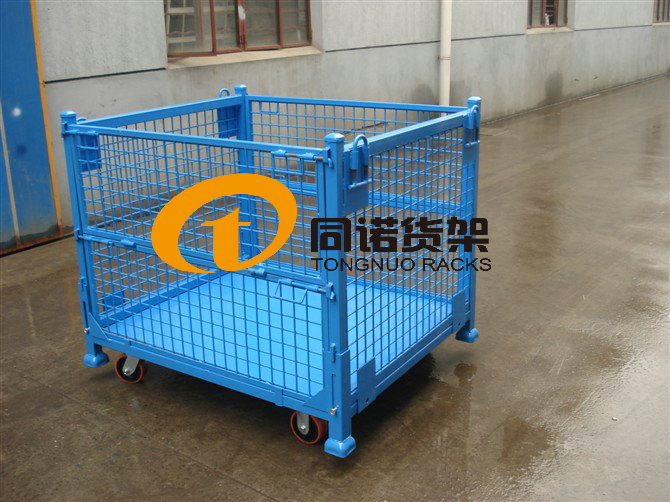
Nanjing's spoken 'iron tote' is really the steel pallet box: we build heavy-load totes in steel. Its base frame joins rectangular tubes welded to steel plate, with steel mesh or plate on the sides, plus stacking feet and forklift slots. Unlike wire-mesh cages for light parts, the tote carries heavier loads and material needing a solid bottom.
Read More →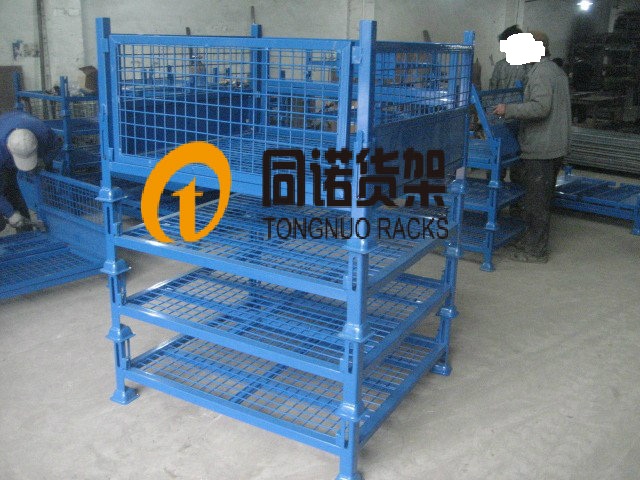
A stackable steel pallet box adds stacking feet to the upper posts and stacking cups to the bottom, so upper and lower boxes nest firmly. Benefits include good looks, toughness, low maintenance, no fixed footprint, and an easy-clean galvanized or powder-coated surface. They suit high-volume, space-tight warehouses; send per-box load and planned layers.
Read More →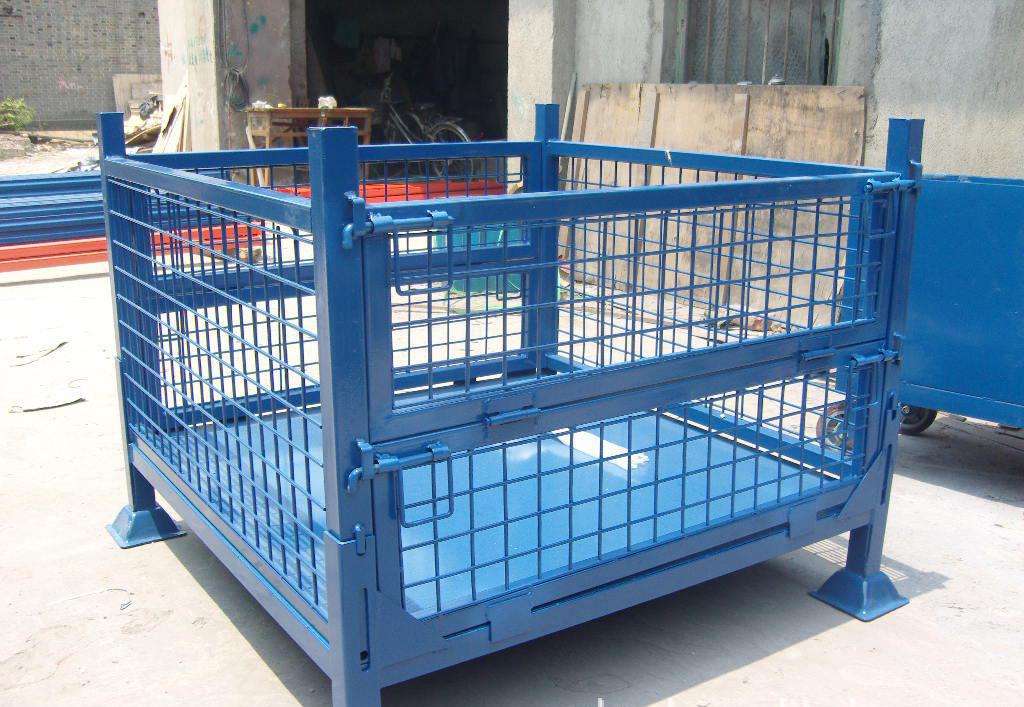
A foldable steel pallet box designs its posts to fold on a hinge from the base frame: loaded it stands as a tote, empty it folds flat so back-haul wastes no space. Standardized craft gives stable quality, clean looks, and fair price. It is foldable, forkliftable, and stackable; mesh totes suit bulky products with visible counts.
Read More →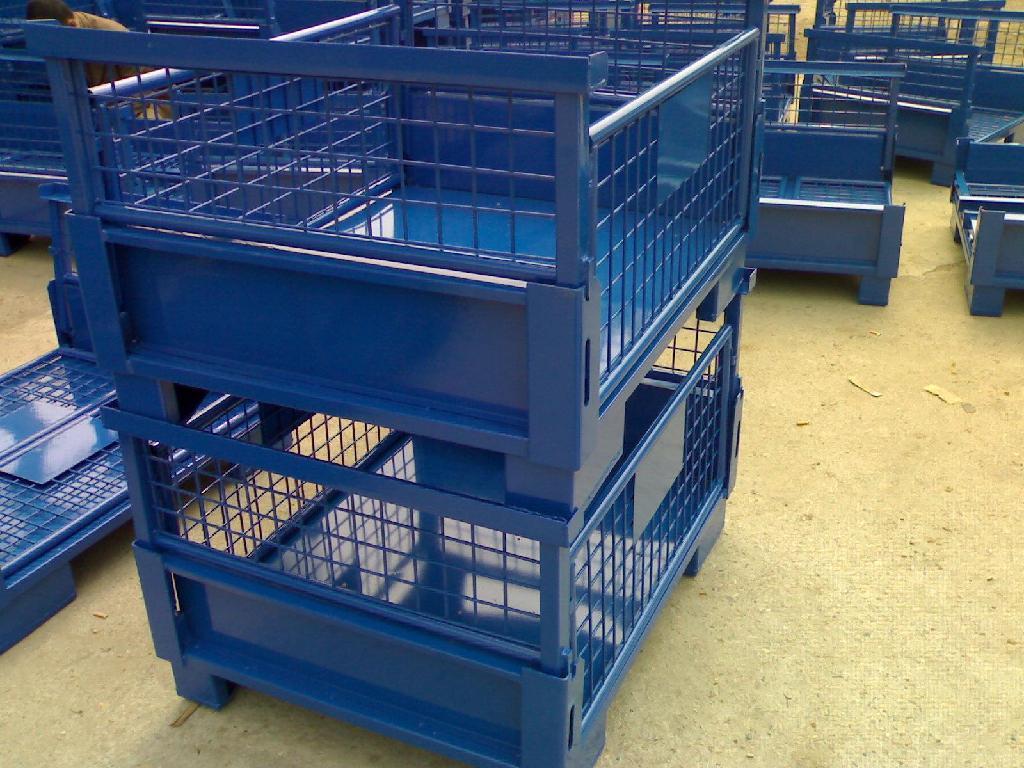
A mesh steel pallet box uses mesh panels or wire cloth on all four sides, so you see contents and remaining quantity at a glance, easing stocktaking. It carries the usual steel-tote benefits: clean looks, toughness, little maintenance, foldable storage, and an easy-clean galvanized or powder-coated surface. Add steel or PVC board inside if dust protection is needed.
Read More →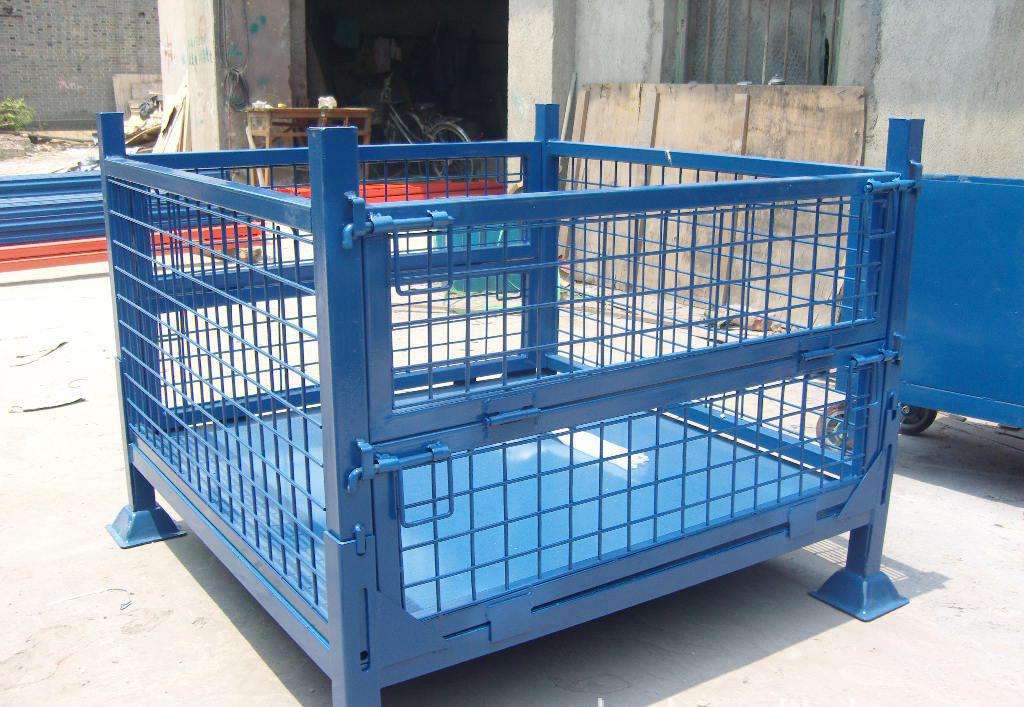
The steel pallet box — also called the metal mesh box or metal tote — holds heavier or bulkier items for mechanical turnover, especially in auto, appliance, and machinery. Square-tube support with plate or mesh body, it stacks, folds, and moves by forklift. Forms include open, panel, mesh, fixed, and foldable. It unitizes loose material and typically stacks four layers.
Read More →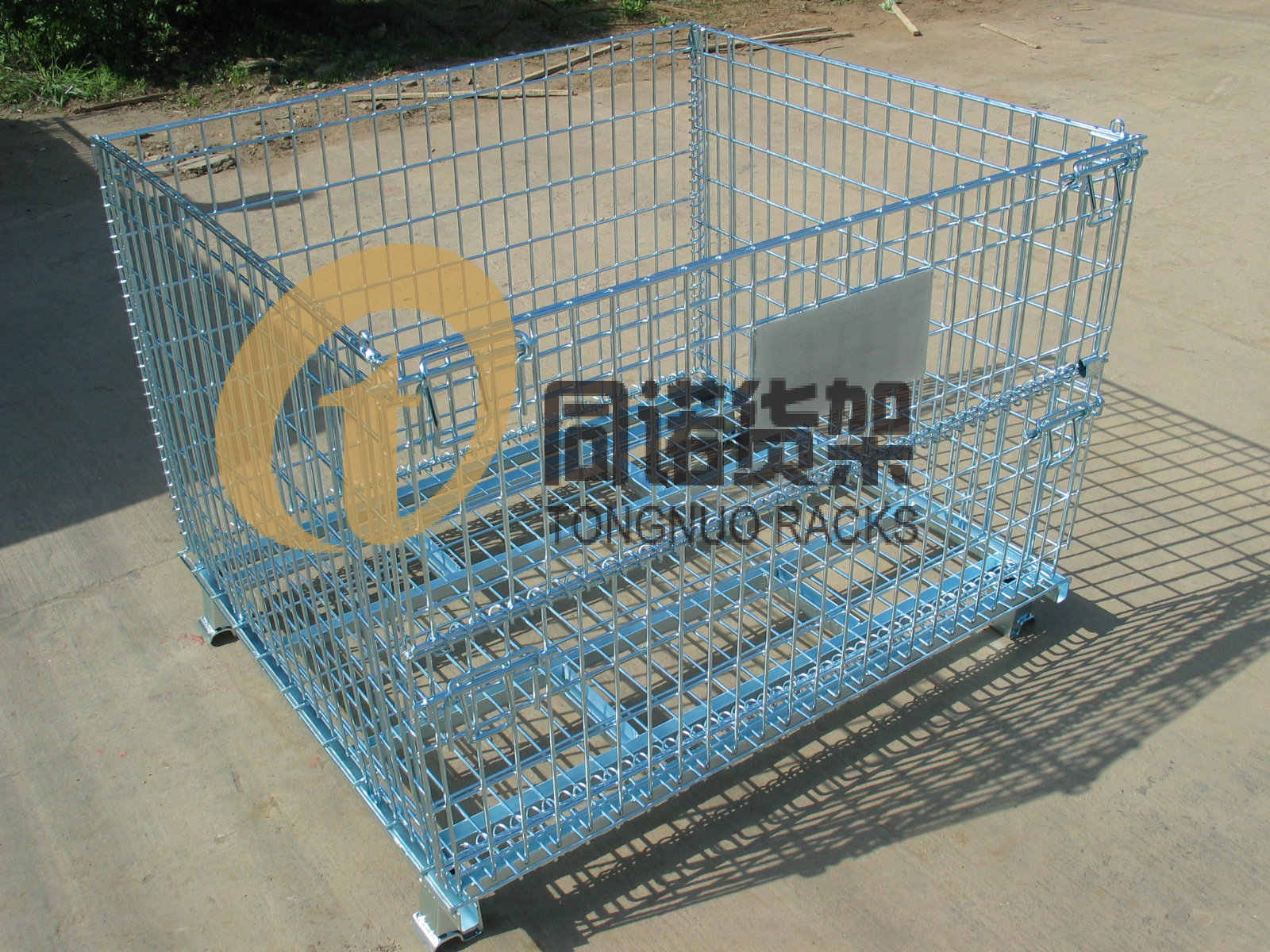
The foldable wire mesh cage is welded from strong wire on a U-channel bottom: foldable, caster-ready, sturdy, and load-heavy, stacking up to four layers. Manufacturers and warehouse supermarkets use it widely. The galvanized surface resists oxidation and stays hygienic; international-standard dimensions pair with shipping containers for export. First-time buyers should send cargo weight, stacking layers, and wheel or racking needs.
Read More →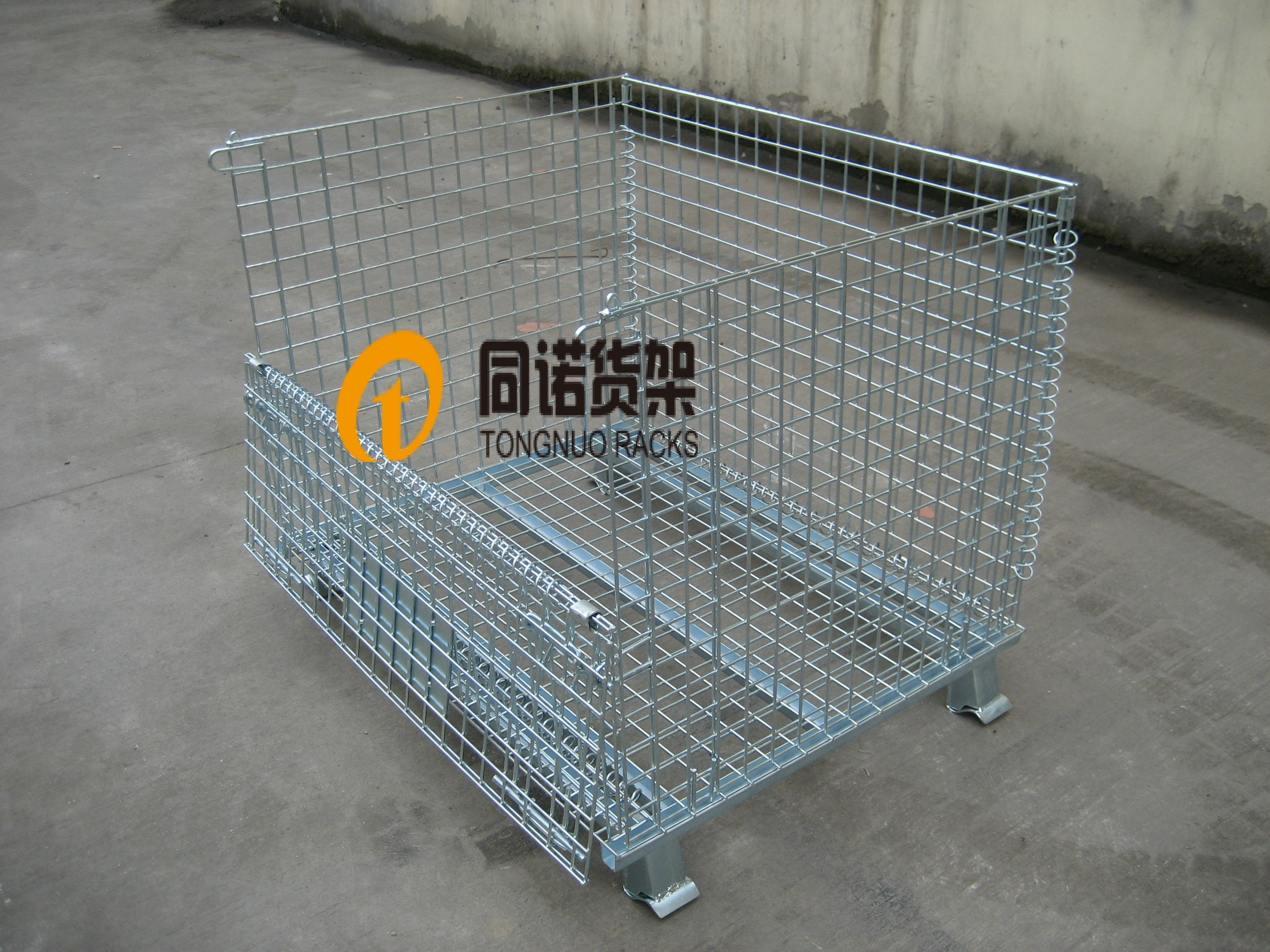
Extend cage life from both material and upkeep. Choose quality steel sized to the load — wire diameter and channel thickness matched, not thin cheap stock — and inspect regularly. Never stack concentrated or off-center loads, which tip high stacks and damage goods. Never rough-handle or bump cages with the forklift, which cracks channel and feet beyond repair.
Read More →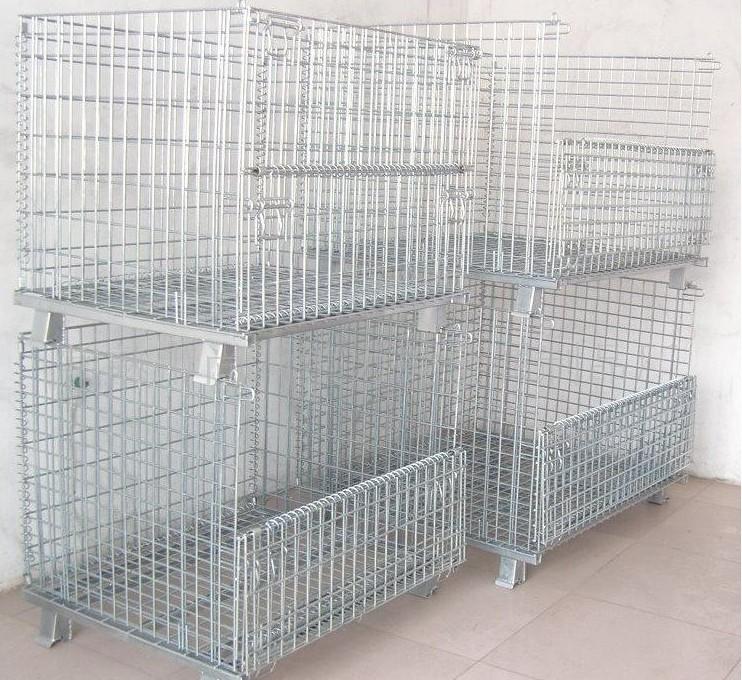
A foldable metal wire basket splits into mesh-panel and base fabrication. Mesh uses Xintongnuo Q235 high wire, drawn to 5.8 or 6.2 mm, cut, and resistance-welded into panels — mostly galvanized, which beats powder coating on rust. The base bends plate (1.8 or 2.5 mm) into channel. Full machine welding beats hand welding on every contact point.
Read More →A standard warehouse cage has stacking feet that sit unstably on rack beams. Two foot modifications solve this: remove the feet and fit square-tube legs for full beam contact, or keep the feet and weld angle steel between them so the cage both stacks and racks. Send beam spacing and outer dimensions for a matched foot.
Read More →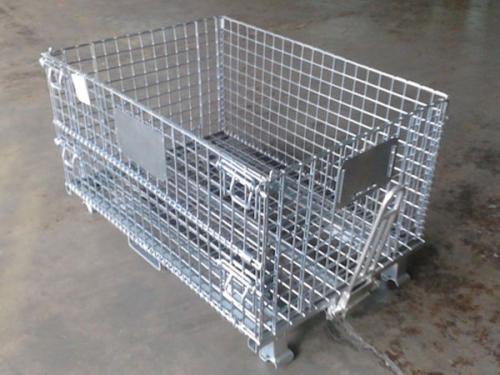
A towing warehouse cage adds towing attachments on both sides, usually with caster wheels, so several cages link front to back and move as a towed train. It is galvanized, strong, reusable, and cuts labor and packaging cost. It suits long-distance, multi-cage turnover on a smooth workshop floor.
Read More →