
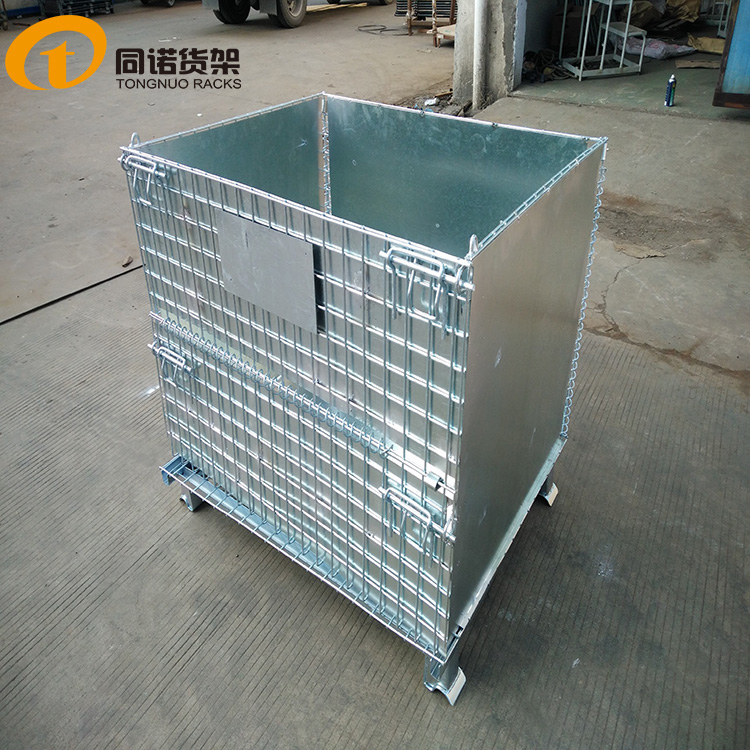
Warehouse cages, also called storage cages or butterfly cages, are an important class of logistics container in storage and transport. They fold freely and fold flat when not in use, saving warehouse space. They look clean, are sturdy and durable, move easily, and carry heavy loads. The product is sturdy, ships conveniently, and is reusable, cutting labor and packaging costs for warehousing companies. It works on factory floors, in supermarket displays and promotions, and in storage, even outdoors. Upgraded cages go onto racking and conveyor lines and can be stacked; wheeled units move easily around the workshop; adding PVC or steel panels stops small parts from falling out. Warehouse cages use Q235 high-wire rod as raw material, cold-drawn into profile, then spot-welded into semi-finished mesh panels. The panels are galvanized or powder-coated (mostly galvanized), then assembled. The main raw material is strong wire drawn from high-wire rod, commonly 5mm, 6mm, or 6.4mm in diameter; mesh spacing is generally 50×100, 100×100, or 50×50. The bottom is welded from U-channel steel rolled by cold-rolled strip mills, and the four bottom corners are stamped in one piece. These materials, processes, surface treatments, and load requirements together determine the price. Dimensions are made to the customer's actual product, and buyers should consider the external dimensions and load requirement when purchasing.