
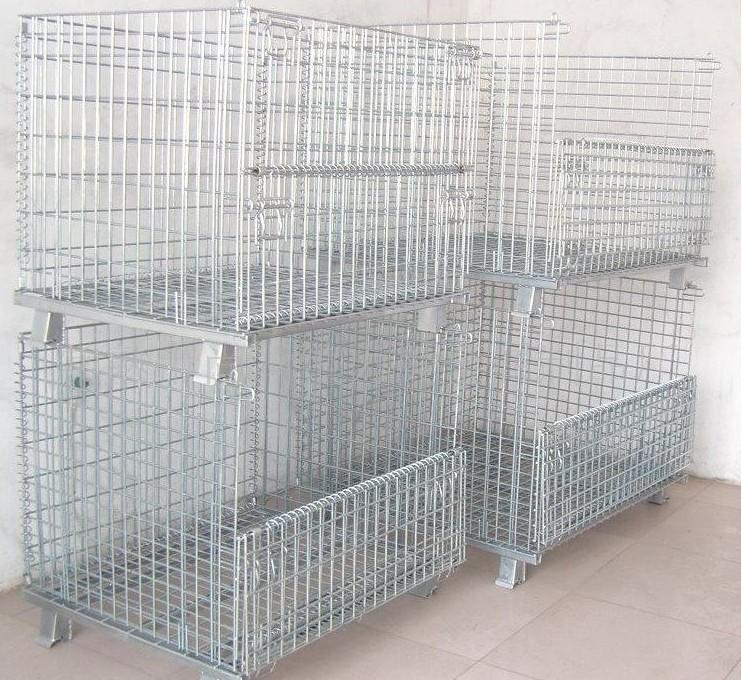
In warehousing, the warehouse cage and the material basket are the two most common logistics items. Many buyers are unsure which to use when; Xintongnuo explains their design and use cases. First, the three main uses of warehouse cages: 1. Storing goods: parts, finished products, semi-finished goods, and raw materials all fit. The sturdy, pressure-resistant structure keeps goods sorted by type, spec, and quantity, easy to manage; 2. Loading and unloading: cages fold, disassemble, and assemble, and with forklifts they load and unload efficiently; 3. Transport: they work by road, rail, and water, protecting goods from damage or loss in transit and easing count and handover; special needs can be custom-built. Now the material basket. A basket generally holds loose or granular material, such as plastic crates or cartons. It is light, easy to pack, and reusable, suited to holding raw materials and semi-finished goods on the workshop floor, packaging fragile or crush-prone goods in logistics, and temporary storage in retail. The warehouse cage itself is steel: sturdy, corrosion-resistant after treatment, and strong under load. Its multi-layer stacking design uses space fully; it usually rides on rollers and chains for forklift loading; and it adjusts to the type and quantity of material. Warehouses in manufacturing, turnover points at logistics firms, and racking aisles in retail all use it. In practice, pair the two: heavy finished goods go in cages, light loose material in baskets, balancing efficiency and cost.