
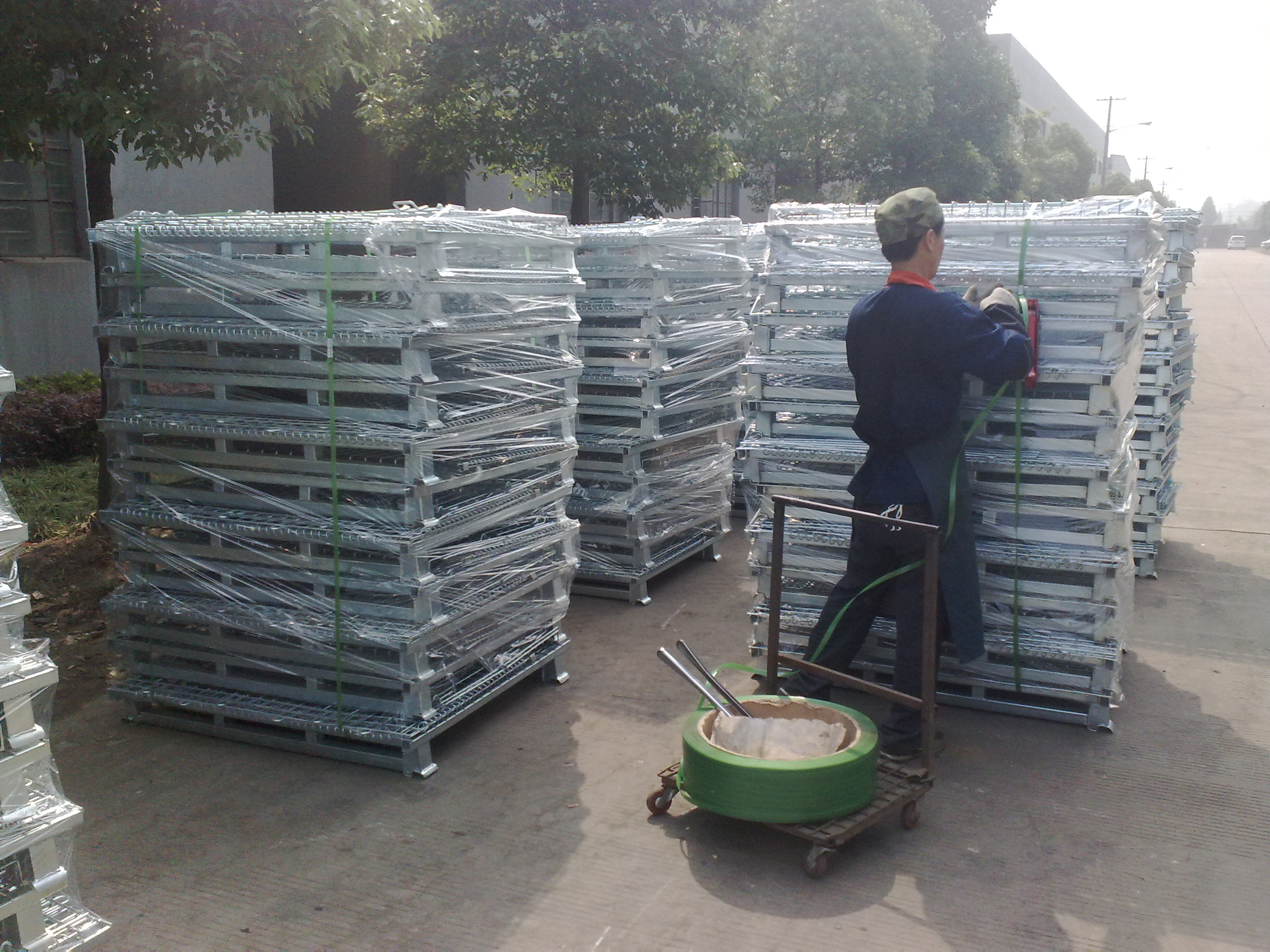
Wooden crates and metal cages are both common packaging and logistics containers for domestic and export use — across logistics, hardware and appliances, precision instruments, bathroom hardware, auto parts, and oversized items. They share ground and differ. First, metal cages fold; wooden crates do not. On empty back-hauls, folded cages stack high, lifting transport efficiency. Second, crates are usually closed; cages are usually mesh. Cages can add steel or hollow-plastic panels for semi-enclosure; crates offer little form variety. Third, crate sides do not open; cages open a half-side door for easy picking. Fourth, crates suit large and medium machinery, sized to order; cage sizes are tooling-bound within a range. Fifth, crates are wood — broken, not recyclable, and not eco-friendly; cages are steel, last years, and go back to the furnace when worn. So: light, small, high-turnover, stock-counting goods pick cages; big machinery, one-way shipping, and enclosed duty pick crates.